Appointing Nepo Babies/Celebrities as Creative Directors: Talent or Influencer Marketing in Disguise?
Seeing your favorite celebrity announced as a brand ambassador is no longer shocking news. In fact, it has become an expected move – especially within luxury fashion. From Emma Stone representing Louis Vuitton to Jacob Elordi fronting Bottega Veneta and Kristen Stewart embodying Chanel, brands have long relied on celebrity power to capture attention and shape desirability.
However, luxury brands are no longer stopping at traditional endorsements. A new shift is emerging – one that goes beyond simply making celebrities the face of a campaign. Increasingly, brands are appointing celebrities, and often so-called “nepo babies”, into creative director roles. This move elevates them from ambassadors to decision-makers, giving them influence not just over brand image, but over the creative direction that shapes collections, storytelling, and cultural positioning.
In doing so, these celebrities are no longer representing the brand – they are actively shaping its direction.
This raises a critical question: are these celebrities chosen for their creative talent, or are they part of a broader strategic marketing move?
Two famous celebrity creative director appointments you’ve probably heard about:
- Jaden Smith – Men’s Creative Director for Christian Louboutin
- Pharrell Williams – Men’s Creative Director for Louis Vuitton
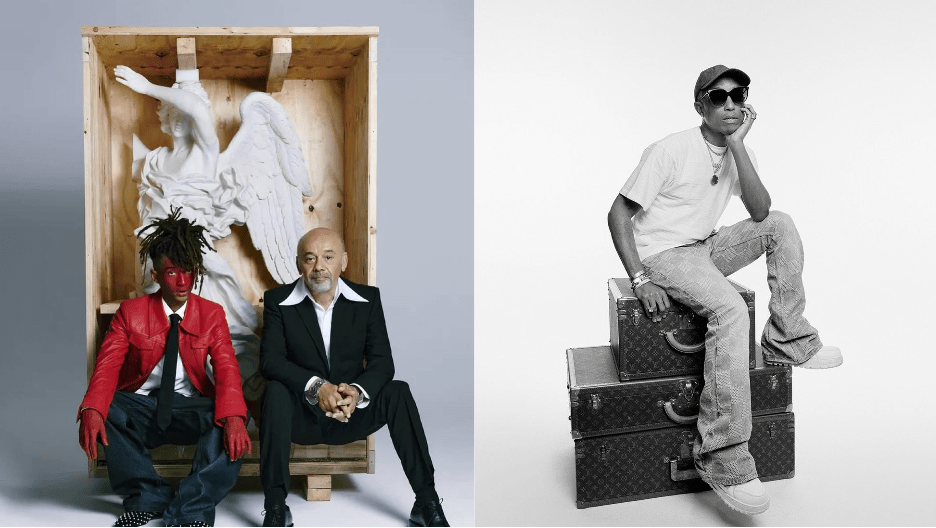
Jaden Smith Faces Criticism While Pharrell Williams Earns Praise
Jaden Smith’s appointment as Creative Director at Christian Louboutin quickly sparked backlash, with David Mouriquand from Euronews calling it ‘peak nepotism’. Critic questioned whether Smith had the experience and expertise needed for such a high-profile role in fashion.
Reactions towards Jaden Smith’s career promotion:
Meanwhile, Pharrell Williams’s appointment tells a very different story.
His role as Men’s Creative Director at Louis Vuitton was widely praised, with Forbes’ Bill Fischer describing it as “inspiring.” Unlike Jaden Smith, Pharrell brings a proven track record—co-founding the streetwear brand Billionaire Boys Club and collaborating with major luxury houses such as Moncler and Chanel. These experiences highlight not only his credibility but also his ability to shape and influence fashion at both street and luxury levels.
What makes Pharrell particularly suited for this role is his ability to disrupt and redefine the boundaries of fashion. Known for his edgy aesthetic and unconventional leadership, he has consistently influenced the intersection of music, culture, and style. This positions him as more than just a creative figure—it makes him a strategic force capable of driving Louis Vuitton menswear toward a culturally relevant and commercially successful future.
The Strategic Marketing Behind These Appointments
From a firm perspective, appointing celebrities or nepo babies aligns closely with the influencer marketing value chain. Celebrities acting as creative directors assist brands in developing customer perception value through authenticity, storytelling, and emotional connection. Consumers today aren’t just buying products—they’re buying into a lifestyle shaped by someone they admire, like Pharrell Williams’ distinct taste and cultural influence. This deeper connection strengthens customer acquisition and retention, as audiences feel part of a community built around the influencer’s identity.
But of course, no strategy is without its flaws. From a platform perspective, algorithms control visibility, meaning high-profile collaboration does not guarantee reach or engagement. Jaden Smith’s appointment, for instance, definitely got people talking—but not necessarily in a positive way. When collaborations feel forced or overly commercial, they can quickly backfire, damaging both the brand’s image and the influencer’s credibility.
Ultimately, appointing celebrities as creative directors is neither purely talent-driven nor just a marketing gimmick. It represents a hybrid strategy that blends creative direction with influencer marketing power. Celebrities are no longer just endorsers in today’s creator economy – they are collaborators shaping brand narratives and driving cultural relevance.
 The Marketing Lab
Leave a comment